
The “other” benefits of asking questions
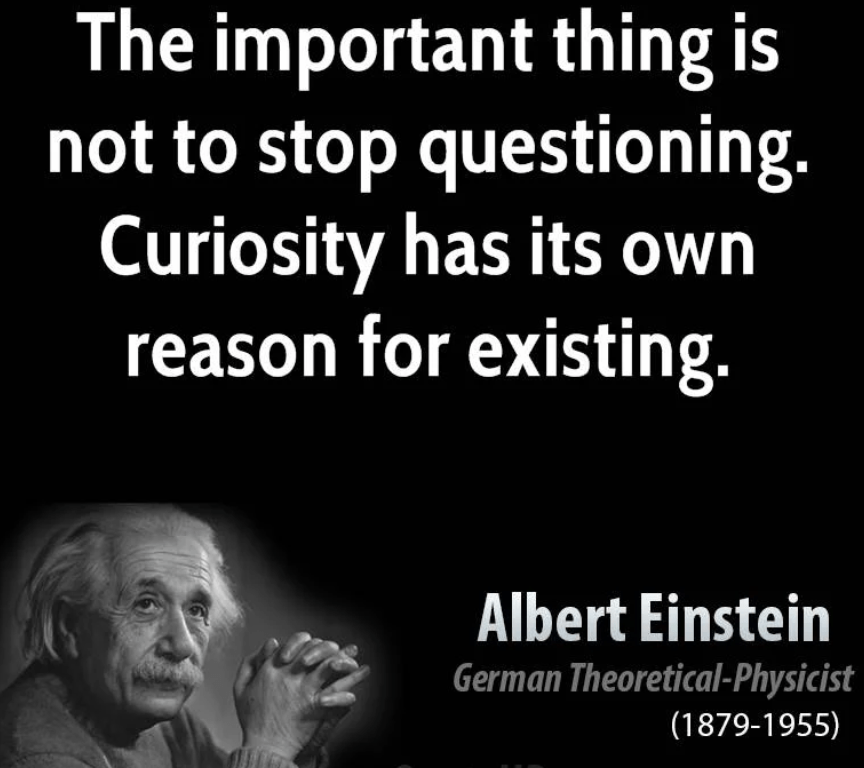
Albert Einstein is widely known as being one of the smartest people to ever live. His contributions to science were groundbreaking, but so were his views on how far a curious mind can take a person in life. He was never shy about the number of questions he asked during his lifetime. Then why is it that many of us – adults and children – are afraid to ask questions out of fear of being judged unfairly or feeling “stupid”? It is never a weakness to ask questions. Instead, it is a sign that you don’t know all the answers, which no one does.
There is endless educational research these days that points to the benefits of inquiry-based learning, as we are witnessing how students are able to make further meaning of their learning by asking and responding to authentic questions and exploration. Many professional development opportunities expose educators to the power of effective questioning techniques and how they can deepen student understanding and reflection. I have also seen innovative teachers creatively model questioning strategies to help guide students working in groups to collaboratively complete a task.
But I’d like to take the power of asking questions even further, as they have other benefits than just the answer. How can exposing students to authentic questions help them learn how to navigate today’s information-rich world, even after leaving the classroom? A friend of mine once told me that curiosity is the key to being a life-long learner. I believe this is what Einstein was referring to as he reflected on the power of asking questions. Learning something new through questions allows us to mold in ourselves a growth mindset and a yearning for new information that we can connect to what we already know. Nathan Young, founder of 600 & Rising, says, “Even simple questions are powerful. Asking ‘Why?’ provokes reflection, and asking ‘Why not?’ drives innovation.” As grown-ups, we have a sense of how powerful this can be, but imagine what a life lesson this would be for a child to learn!
As adults, we would all benefit from going back to the innocence of childhood and learning how to ask questions again. Why are we limiting what we can understand further? Currently interviewing for leadership jobs at other schools, I can already imagine the amount of questions I will ask when I join my new community. How else am I going to find out about the school, the current culture, structures, communication channels, etc.? I have seen previous school administrators do the same as they enter a new school setting, serving to help communicate a positive and comfortable tone for their transition to a new culture and environment. Asking authentic questions also puts the attention on learning something new rather than an initial focus on leadership titles or supervisory positions. When leaders start asking questions, they make it OK for others to ask questions. This is a thoughtful step for leaders to take as they begin to establish and create interpersonal relationships, effective teams, and positive culture-building.
Asking questions can also equally be as valuable when they are written down. Feedback or climate surveys are powerful data-gathering tools that help drive improvements. Again, the focus still lies on gathering information that was not previously known before. As adults, it can be easy to fall into the trap of thinking that we need to know all the answers. This can have a negative effect on so many levels. Instead, in our teams, let’s focus on asking good questions. Not all questions will give us the right answers, but sometimes the focus, power, and influence can be on the question itself.

 Mark Dominguez